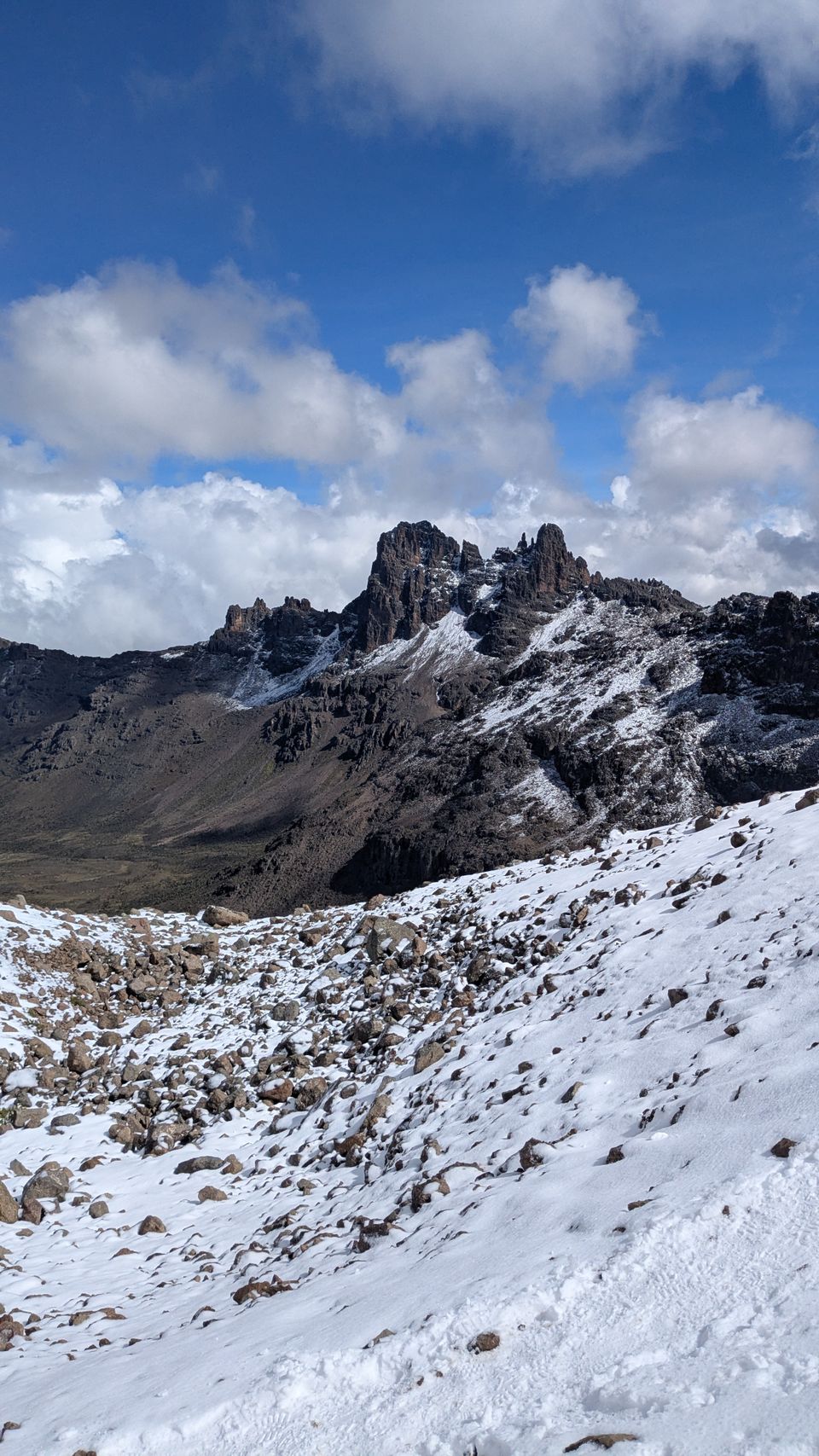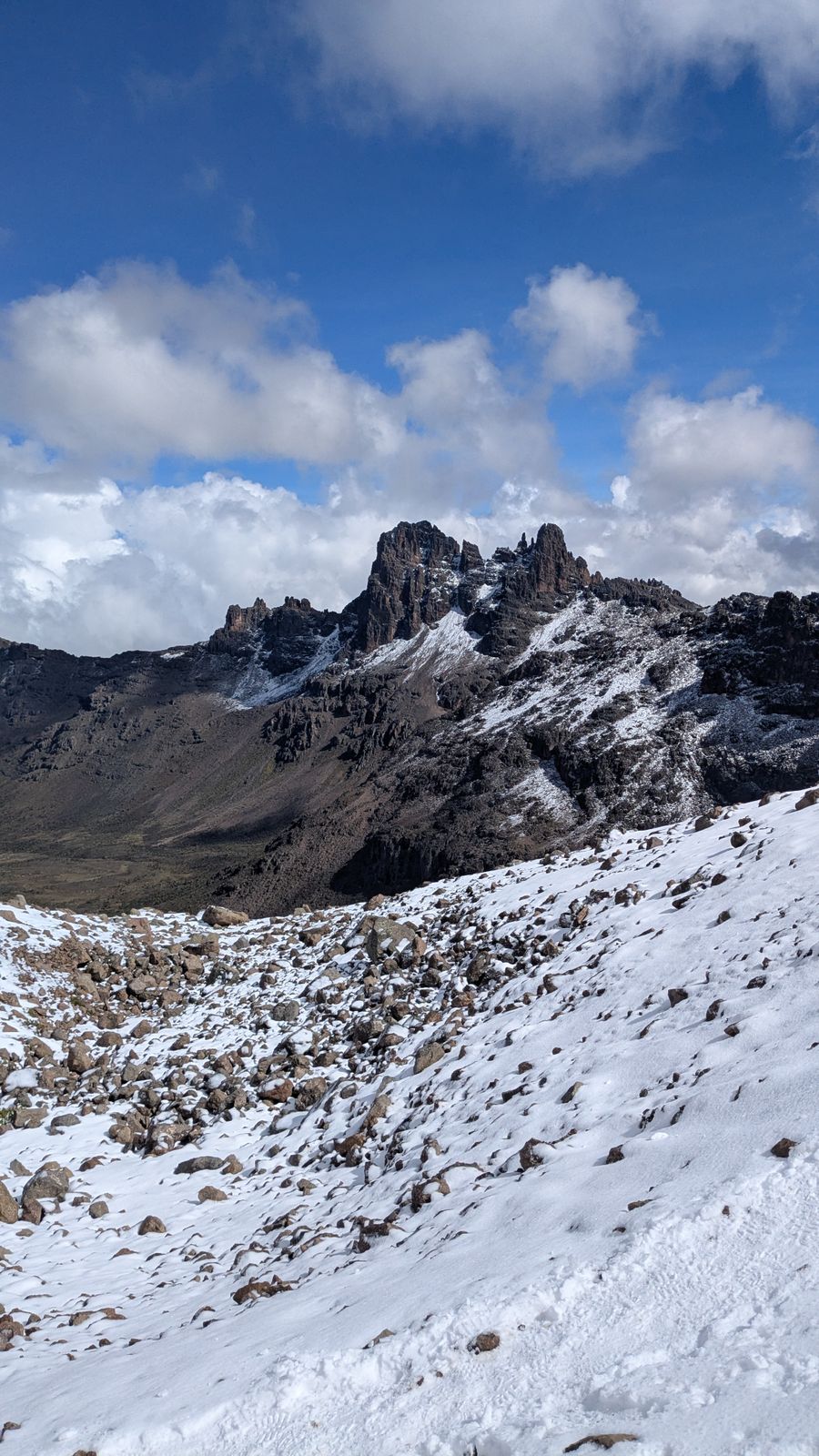
Mount Kenya is Africa's second-highest mountain and a rewarding trekking destination in its own right, quite different from a savannah safari. Its lower slopes are the source of much of central Kenya's water and agriculture, while the upper mountain moves through forest, bamboo, moorland and afro-alpine zones before reaching the rocky summit area. Point Lenana (4,985m) is reachable by trekking alone; the higher technical peaks (Batian and Nelion) require rock climbing.
Multi-day trekking to Point Lenana via the Sirimon, Chogoria or Naro Moru routes
Technical rock climbing on Batian and Nelion for experienced climbers
Day hikes in the lower forest zone
Trout fishing in mountain streams (permit required)
The two driest windows are mid-January to end of February and July to October, offering the most stable trekking conditions. The mountain can be climbed outside these windows, but expect wetter trails.
Trailheads (Sirimon, Chogoria, Naro Moru) are reached by road from Nairobi in roughly 3-4 hours, typically with an overnight in Nanyuki or Chogoria town before starting the trek.
A mix of mountain huts and camping depending on route; towns at the base (Nanyuki, Chogoria) have a range of hotels for the nights before and after your climb.
Altitude sickness is the primary risk - a gradual route like Sirimon or Chogoria improves acclimatisation odds
A national park fee and camping/hut fees apply
Nights on the mountain can drop below freezing even though you're near the equator - pack accordingly
Tell us your dates and we'll build an itinerary that includes it.