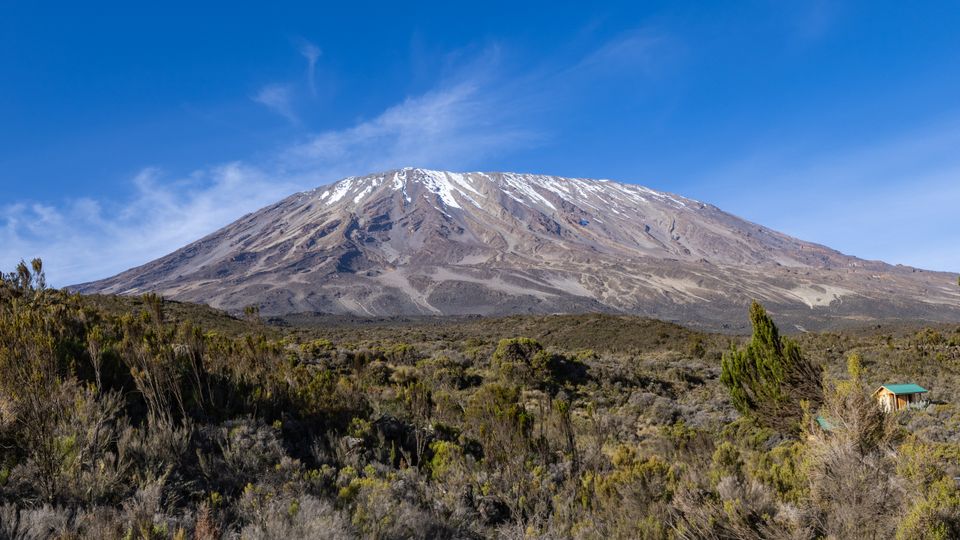
Tour Overview
Climbing Mount Kilimanjaro via the Marangu Route is a classic way to experience Africa’s highest mountain. Known for its established trail and permanent mountain huts, the Marangu Route offers a different experience from Kilimanjaro routes that rely on camping throughout the climb.
This 5-day Mount Kilimanjaro Marangu Route trek takes you from the lush rainforest on the mountain’s lower slopes to the open moorlands, alpine desert and spectacular summit zone. Along the way, you will stay at designated mountain huts, enjoy changing landscapes and work towards reaching Uhuru Peak, which stands at 5,895 metres above sea level.
Often called the Coca-Cola Route, Marangu is popular with climbers who prefer sleeping in mountain huts rather than tents. The trail follows the same general route for the ascent and descent, passing Mandara Hut, Horombo Hut and Kibo Hut before the summit attempt.
Your journey begins at Marangu Gate, where the trail enters the forest. As you climb higher, the vegetation gradually changes, revealing open mountain scenery and views of the distinctive peaks of Kibo and Mawenzi.
The summit attempt usually starts around midnight from Kibo Hut. You will climb towards Gilman’s Point on the crater rim before continuing to Uhuru Peak, weather and physical conditions permitting. Reaching the summit is a demanding achievement, with the reward of standing at the highest point in Africa.
This five-day itinerary is relatively short for a high-altitude climb, so proper preparation and careful attention to acclimatisation are important. Travellers who prefer a more gradual ascent may wish to consider a longer itinerary with an additional acclimatisation day.
Whether you are planning a Mount Kilimanjaro climbing holiday or looking for a traditional hut-based trekking experience in Tanzania, the Marangu Route offers a memorable journey through one of Africa’s most remarkable mountain landscapes.
Experienced hikersmountain trekking enthusiaststravellers seeking a shorter Kilimanjaro itinerary
Safari Highlights
Attempt Uhuru Peak: Work towards reaching the summit of Mount Kilimanjaro at 5,895 metres.
Stay in permanent mountain huts: Enjoy sheltered dormitory-style accommodation instead of sleeping in tents.
Walk through Kilimanjaro’s rainforest: Explore the lush lower slopes and look out for native wildlife.
Discover the mountain’s moorland: Experience changing vegetation and wide-open landscapes as you gain altitude.
Cross the alpine desert: Trek across the stark terrain between Horombo Hut and Kibo Hut.
See Mawenzi and Kibo peaks: Enjoy views of Kilimanjaro’s distinctive volcanic formations.
Experience a high-altitude summit attempt: Follow your guide towards Gilman’s Point and Uhuru Peak.
Return along the Marangu Route: Descend through the same mountain corridor used during the ascent.
Day-by-Day Itinerary
D1
Marangu Gate to Mandara Hut
Marangu Gate → Mandara Hut
Starting altitude: Approximately 1,860 metres
Destination altitude: Approximately 2,700 metres
Trekking time: 4–5 hours
Accommodation: Mandara Hut
Meals: Lunch and dinner
Your Mount Kilimanjaro adventure begins with a transfer to Marangu Gate on the southeastern side of the mountain.
After registration and the necessary entry formalities, meet your professional mountain guide and support crew before beginning the trek.
The trail winds through lush rainforest, where tall trees, ferns and thick vegetation create a cool, shaded environment. Listen for birds and look out for wildlife along the path, including the black-and-white colobus monkey, which inhabits parts of Kilimanjaro’s forest zone.
The walking is generally gradual, making this a good opportunity to settle into a comfortable rhythm. Your guide will encourage you to walk slowly, drink enough water and conserve your energy for the higher sections of the mountain.
After several hours, arrive at Mandara Hut, your first overnight stop. The camp provides dormitory-style accommodation where you can relax and enjoy a freshly prepared meal.
If time, weather and your physical condition permit, you may take a short walk towards Maundi Crater for views of the surrounding landscape.
Return to the hut for dinner and a briefing about the following day’s trek.
Overnight: Mandara Hut.
D2
Mandara Hut to Horombo Hut
Mandara Hut → Horombo Hut
Starting altitude: Approximately 2,700 metres
Destination altitude: Approximately 3,720 metres
Trekking time: 5–7 hours
Accommodation: Horombo Hut
Meals: Breakfast, lunch and dinner
After breakfast, leave the rainforest behind and continue towards Horombo Hut.
The trail gradually climbs into open heathland and moorland, where the vegetation becomes shorter and the views expand across the mountain slopes. Giant heathers and distinctive highland plants add character to the landscape.
As you gain altitude, you may catch your first clear views of Mawenzi and Kibo, two of Kilimanjaro’s most recognisable volcanic peaks.
Today’s walk involves a greater elevation gain than the previous day. Maintain a steady pace and follow your guide’s advice, allowing your body time to adjust to the changing altitude.
Arrive at Horombo Hut in the afternoon. Situated in a scenic mountain setting, the hut serves as an important overnight stop for climbers continuing towards the summit.
Enjoy dinner, rest and prepare your clothing and equipment for the next stage of the climb.
Overnight: Horombo Hut.
D3
Horombo Hut to Kibo Hut
Horombo Hut → Kibo Hut
Starting altitude: Approximately 3,720 metres
Destination altitude: Approximately 4,700 metres
Trekking time: 5–7 hours
Accommodation: Kibo Hut
Meals: Breakfast, lunch and dinner
After breakfast, continue towards Kibo Hut, crossing the broad alpine Saddle between Mawenzi and Kibo.
The landscape changes noticeably as the trail leaves the moorland behind and enters the high-altitude desert. Vegetation becomes scarce, and the terrain is increasingly dominated by volcanic rock, loose gravel and open expanses.
Although the path is relatively straightforward in places, the altitude makes the walk more physically demanding. Your guide will maintain a measured pace and encourage regular hydration.
As you approach Kibo Hut, the summit slopes of Kibo become more prominent. The hut sits at approximately 4,700 metres and serves as the final overnight stop before the summit attempt.
After arriving, have an early meal, organise your summit equipment and rest as much as possible. Your guide will explain the planned departure time and review important safety procedures.
The summit attempt generally begins around midnight, so conserving energy during the afternoon is essential.
Overnight: Kibo Hut.
D4
Kibo Hut to Uhuru Peak and Descent to Horombo Hut
Kibo Hut → Uhuru Peak and Descent → Horombo Hut
Starting altitude: Approximately 4,700 metres
Summit altitude: 5,895 metres
Destination altitude: Approximately 3,720 metres
Trekking time: Approximately 11–15 hours or longer, depending on conditions and individual pace
Accommodation: Horombo Hut
Meals: Breakfast, lunch and dinner, according to the day’s arrangements
This is the most demanding day of your Mount Kilimanjaro climbing adventure.
The summit attempt usually begins around midnight. After a light meal and an equipment check, set off with your mountain guide along the steep trail towards Gilman’s Point.
The climb takes place in darkness and often in freezing temperatures. The combination of steep terrain, physical exertion and reduced oxygen availability makes this section challenging, even for well-prepared hikers.
Your guide will establish a slow, steady pace and monitor your condition throughout the ascent. If you experience symptoms of altitude sickness or become unwell, inform your guide immediately.
After reaching Gilman’s Point on the crater rim, continue towards Uhuru Peak if your condition and the prevailing conditions allow.
At 5,895 metres above sea level, Uhuru Peak is the highest point in Africa. Reaching the summit is a remarkable achievement, and clear weather may reveal expansive views across the surrounding landscape.
After spending a short time at the summit, begin the descent towards Kibo Hut. Take time to rest and replenish your energy before continuing down to Horombo Hut.
The long descent can be tiring, so follow your guide’s instructions and take care on loose or uneven ground.
Arrive at Horombo Hut for dinner and an overnight rest.
Important: Reaching Uhuru Peak cannot be guaranteed. Your guide may recommend stopping the ascent if altitude-related symptoms, weather or other safety concerns make continuing unsafe.
Overnight: Horombo Hut.
D5
Horombo Hut to Marangu Gate – End of the Climb
Horombo Hut → Marangu Gate
Starting altitude: Approximately 3,720 metres
Finishing altitude: Approximately 1,860 metres
Trekking time: Approximately 5–7 hours
Accommodation: Not included after the climb
Meals: Breakfast and lunch, according to the final arrangements
Enjoy breakfast at Horombo Hut before beginning the final descent.
The trail leads back through the open moorland before entering the greener forest zone. Along the way, you will revisit sections of the landscape encountered during the ascent, offering a different perspective after several days on the mountain.
Although the descent is less demanding than summit day, tired muscles and uneven terrain require care. Walk at a comfortable pace and take breaks when necessary.
Continue to Mandara Hut for a short rest, depending on the day’s arrangements, before proceeding through the rainforest towards Marangu Gate.
Upon reaching the gate, complete the required exit formalities. Climbers who qualify under the mountain authority’s requirements may receive a certificate recognising their achievement.
Meet your driver for the arranged transfer to your agreed destination.
Your five-day Marangu Route adventure concludes at the mountain gate, marking the end of your journey towards the Roof of Africa.
End of trek: Marangu Gate.
What's Included
- All applicable Mount Kilimanjaro park entrance and conservation fees, mountain hut fees, rescue fees and other mandatory park charges required for the itinerary.
- Professional English-speaking mountain guide or guides.
- Mountain porters and cook.
- Four nights of mountain hut accommodation according to the itinerary.
- Meals during the climb as specified in the itinerary.
- Drinking water during the trek, according to the operator’s water provision arrangements.
- Transfers to and from the mountain gates, as specified in the booking.
- Pre-climb briefing and trekking orientation.
- Summit certificate for climbers who qualify under the applicable mountain authority’s rules.
- Well-broken-in hiking boots with good grip.
- Moisture-wicking base layers.
- Comfortable trekking trousers.
- Warm fleece or insulating mid-layers.
- Waterproof and wind-resistant jacket and trousers.
- An insulated jacket for summit night.
- Warm gloves, a hat and a neck covering.
- A sleeping bag suitable for cold mountain temperatures.
- Trekking poles.
- A headlamp with spare batteries.
- Sunglasses and sunscreen.
- A reusable water bottle or hydration system.
- A comfortable daypack and waterproof cover.
- Personal toiletries and a small towel.
- Any prescribed medication you may need.
- Check with your operator to confirm which equipment is supplied and whether additional items can be hired locally.
What's Excluded
- International and domestic flights.
- Tanzania visa fees, where applicable.
- Accommodation in Moshi or Arusha before the climb.
- Accommodation in Moshi or Arusha after completing the trek.
- Meals and drinks not specified in the itinerary.
- Personal trekking equipment, including hiking boots, warm clothing, rainwear and sleeping bags, unless explicitly included.
- Travel insurance covering high-altitude trekking and emergency evacuation.
- Tips and gratuities for guides, porters and cooks.
- Personal expenses, laundry and souvenirs.
- Optional activities and services not listed in the package inclusions.
Accommodation & Safari Vehicle
Accommodation: Mountain Huts
Vehicle: Road transfers to and from the mountain gates
Best Time to Visit
The two main dry windows are late June to October and December to mid-March, offering more stable weather. The long rains (April-May) are generally avoided for climbing.
Frequently Asked Questions
How long does it take to climb Mount Kilimanjaro via the Marangu Route?
This itinerary takes five days on the mountain. It includes the ascent to Uhuru Peak, a descent to Horombo Hut after the summit attempt and the final walk to Marangu Gate.
Is the Marangu Route the easiest way to climb Kilimanjaro?
Marangu has a relatively established trail and mountain hut accommodation, but that does not make the climb easy. The five-day itinerary allows limited time for acclimatisation, making the altitude a significant challenge.
Are all park entrance fees included in the package?
Yes. All applicable park entrance and conservation fees, mountain hut fees, rescue fees and other mandatory park charges required for the itinerary are included.
What is the highest point on the Marangu Route?
The summit objective is Uhuru Peak, at 5,895 metres above sea level. Climbers reach it by ascending towards Gilman’s Point and continuing along the crater rim, conditions permitting.
Does the Marangu Route use tents?
No. The Marangu Route is known for its permanent mountain huts, which provide shared dormitory-style accommodation during the climb.
Is the five-day Marangu Route suitable for beginners?
It may suit well-prepared hikers with good fitness, but the short itinerary is physically demanding and allows limited acclimatisation time. Travellers who are new to high-altitude trekking should discuss the suitability of the five-day itinerary with their operator.
Where does the Marangu Route start and finish?
The climb begins at Marangu Gate and returns to the same gate after the summit attempt and descent.
Can I see Mount Kilimanjaro’s glaciers during the climb?
The route offers views of the upper mountain and its summit landscape. Visibility varies with weather, and access to specific features depends on the trail and prevailing conditions.
What meals are provided during the climb?
Meals are provided according to the package arrangements and itinerary. A mountain cook prepares food during the trek. Inform your operator about dietary requirements before departure.
Is accommodation before and after the climb included?
No. Accommodation in Moshi or Arusha before the climb and after returning from the mountain is not included. Travellers requiring additional hotel nights should arrange them separately.
What happens if I cannot reach Uhuru Peak?
Your guide will assess your condition during the climb and may recommend turning back if altitude symptoms, severe fatigue or unsafe weather conditions arise. Your safety takes priority over reaching the summit.
Do I need travel insurance for the Marangu Route?
Comprehensive travel insurance covering high-altitude trekking, medical expenses and emergency evacuation is strongly recommended. Check that your policy covers the altitude and activities involved in your climb.
Ready to go?
Reserve the 5-Day Mount Kilimanjaro Marangu Route – The Classic Hut Climb in under a minute - no payment needed now.
Book Now