Tour Overview
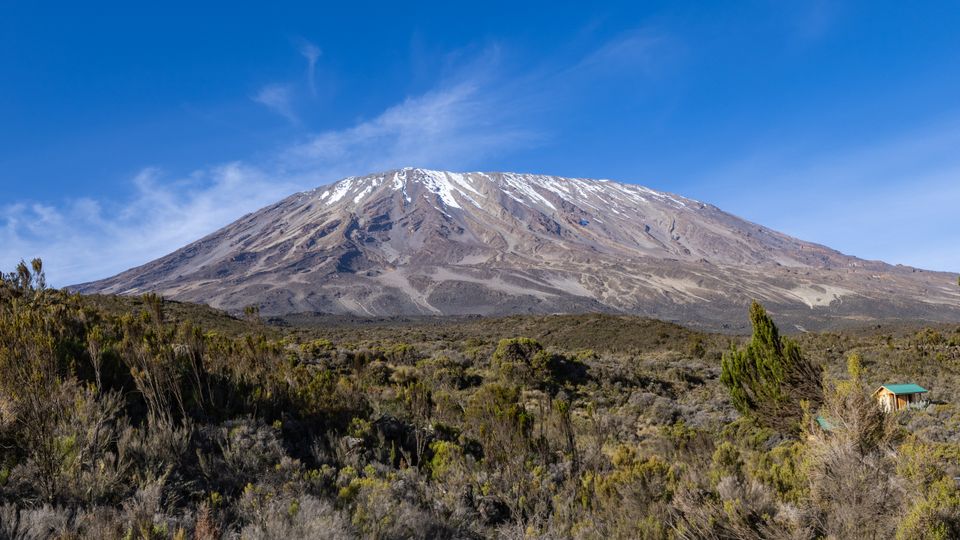
Take on one of Africa’s most remarkable mountain adventures with this 6-day Mount Kilimanjaro climb via the Rongai Route. Approaching the mountain from the north, close to the Kenyan border, this trail offers a different perspective of Kilimanjaro, with quieter paths, expansive wilderness scenery and a gradual introduction to the mountain’s changing landscapes.
The Rongai Route is an excellent option for trekkers who prefer a less crowded approach to Africa’s highest mountain. The journey begins among the cultivated foothills and forested slopes before opening into wide stretches of moorland, rocky terrain and high-altitude alpine scenery. As you climb higher, the dramatic peaks of Mawenzi and Kibo become increasingly prominent.
Over six days, you will trek through several ecological zones, spend nights at designated mountain camps and prepare for the demanding final ascent to Uhuru Peak, which stands at 5,895 metres above sea level.
The summit attempt usually begins around midnight from Kibo Hut. Guided by your experienced mountain crew, you will climb towards Gilman’s Point before continuing along the crater rim to Uhuru Peak, weather and physical conditions permitting. Reaching the summit offers an extraordinary sense of achievement and sweeping views across the surrounding landscape when visibility allows.
After the summit, you will descend through the mountain’s southern side, finishing at Marangu Gate.
This six-day Kilimanjaro Rongai Route trek is suited to physically prepared travellers seeking a challenging high-altitude adventure, memorable wilderness scenery and the opportunity to stand on the highest point in Africa.
Safari Highlights
Reach Uhuru Peak: Attempt the summit of Mount Kilimanjaro at 5,895 metres, the highest point in Africa.
Explore Kilimanjaro’s quieter northern slopes: Experience the distinctive wilderness scenery of the Rongai Route.
Enjoy views of Mawenzi Peak: Admire the rugged volcanic formations surrounding Mawenzi Tarn.
Cross the alpine Saddle: Trek across the high-altitude landscape between Mawenzi and Kibo.
Experience changing vegetation zones: Walk through forest, open moorland, alpine desert and high-altitude terrain.
Camp beneath the African sky: Spend nights at designated mountain camps during the ascent.
Receive support from an experienced mountain crew: Trek with professional guides, porters and cooks.
Descend through the Marangu Route: Complete your journey on Kilimanjaro’s southern side.
Day-by-Day Itinerary
D1
Rongai Gate to Simba Camp
Rongai Gate → Simba Camp
Trekking time: Approximately 3–4 hours
Starting altitude: Approximately 1,950 metres
Destination altitude: Approximately 2,625 metres
Accommodation: Simba Camp
Meals: Lunch and dinner
Your Kilimanjaro climbing adventure begins with a transfer to the Rongai Gate on the mountain’s northern side. The journey passes through rural landscapes and small settlements before reaching the starting point of the trek.
After registration and the necessary entry formalities, meet your mountain crew and begin walking through the lower slopes of Kilimanjaro.
The trail gradually climbs through cultivated areas and forest, with the scenery becoming increasingly wild as you move away from the settled foothills. The northern approach is known for its quieter atmosphere and expansive views towards the surrounding countryside.
Your guide will establish a comfortable walking pace, allowing the group to adjust to the trail and the initial change in altitude.
By afternoon, arrive at Simba Camp, where your tents will be prepared by the mountain crew. Enjoy a freshly prepared meal, relax and receive a briefing about the following day’s trek.
Overnight: Simba Camp.
D2
Simba Camp to Second Cave Camp
Simba Camp → Second Cave Camp
Trekking time: Approximately 3–4 hours
Starting altitude: Approximately 2,625 metres
Destination altitude: Approximately 3,450 metres
Accommodation: Second Cave Camp
Meals: Breakfast, lunch and dinner
Wake up to the cool mountain air and enjoy breakfast before continuing your ascent.
Today’s trail moves beyond the forest into open heathland and moorland, revealing broader views of Kilimanjaro’s northern slopes. As the vegetation becomes less dense, the landscape opens towards the surrounding plains and the imposing volcanic peaks ahead.
The walk is a gradual introduction to higher elevations, although the thinner air may make the climb feel more demanding than the distance suggests.
Your guide will encourage steady progress, regular hydration and appropriate rest breaks. These habits become increasingly important as the trek gains altitude.
Arrive at Second Cave Camp and settle into your mountain campsite. Depending on the group’s condition and the guide’s assessment, there may be an opportunity for a short acclimatisation walk before dinner.
Spend the evening resting and preparing for the next stage of the climb.
Overnight: Second Cave Camp.
D3
Second Cave Camp to Kikelewa Camp
Second Cave Camp → Kikelewa Camp
Trekking time: Approximately 3–4 hours
Starting altitude: Approximately 3,450 metres
Destination altitude: Approximately 3,600 metres
Accommodation: Kikelewa Camp
Meals: Breakfast, lunch and dinner
After breakfast, leave Second Cave Camp and continue across the open moorland of Kilimanjaro’s northern slopes.
The trail gradually approaches the rugged landscape beneath Mawenzi Peak. Giant heather, hardy alpine plants and expansive views create a striking contrast with the greener vegetation encountered during the early stages of the trek.
Although the day’s elevation gain is relatively modest, the terrain and altitude still require careful pacing. Your guide will monitor the group’s progress and encourage you to walk slowly, helping your body adjust to the mountain environment.
Arrive at Kikelewa Camp, a remote campsite surrounded by dramatic mountain scenery. The area offers a peaceful setting for resting after the day’s walk.
After settling in, enjoy a warm meal prepared by the mountain cook. Use the remaining time to relax, drink water and prepare for the steeper ascent towards Mawenzi Tarn.
Overnight: Kikelewa Camp.
D4
Kikelewa Camp to Mawenzi Tarn Camp
Kikelewa Camp → Mawenzi Tarn Camp
Trekking time: Approximately 3–4 hours
Starting altitude: Approximately 3,600 metres
Destination altitude: Approximately 4,330 metres
Accommodation: Mawenzi Tarn Camp
Meals: Breakfast, lunch and dinner
Today’s trek climbs more steeply towards Mawenzi Tarn, one of the most scenic campsites along the Rongai Route.
As you leave Kikelewa Camp, the trail ascends through increasingly sparse vegetation and rugged terrain. The surrounding landscape becomes more dramatic, with Mawenzi’s jagged volcanic formations rising above the campsite.
The walk requires a steady pace and careful attention to your footing. At this elevation, even a relatively short distance can feel strenuous, so allow yourself time to rest when necessary.
Upon reaching Mawenzi Tarn Camp, take in the impressive mountain scenery and enjoy the unique atmosphere of this high-altitude location.
The afternoon is generally reserved for rest, hydration and acclimatisation, subject to your guide’s recommendations and the day’s conditions.
Your mountain crew will prepare dinner and provide a briefing about the next stage of the journey across the Saddle towards Kibo Hut.
Overnight: Mawenzi Tarn Camp.
D5
Mawenzi Tarn Camp to Kibo Hut – Summit Attempt at Uhuru Peak – Descent to Horombo Hut
Mawenzi Tarn Camp → Kibo Hut
Trekking time: Approximately 10–15 hours or longer, depending on conditions and individual pace
Highest point: Uhuru Peak, 5,895 metres
Accommodation: Horombo Hut
Meals: Breakfast, lunch and dinner, subject to the operating arrangements
This is the most demanding day of your six-day Kilimanjaro climb.
After breakfast, leave Mawenzi Tarn Camp and cross the broad alpine Saddle towards Kibo Hut. The landscape becomes increasingly barren, with rocky ground and limited vegetation defining the high-altitude environment.
On arrival at Kibo Hut, take time to rest, eat and prepare your equipment for the summit attempt. Your guide will explain the expected schedule, review safety procedures and assess whether the group is ready to continue.
The summit climb typically begins around midnight. Walking slowly under the night sky, you will ascend towards Gilman’s Point on the crater rim.
This section is physically demanding, with steep terrain, cold temperatures and reduced oxygen availability. Your guide will monitor your condition and adjust the pace as necessary.
After reaching Gilman’s Point, continue along the crater rim towards Uhuru Peak, weather, trail conditions and your physical condition permitting.
At 5,895 metres above sea level, Uhuru Peak marks the highest point in Africa. If you reach the summit, take time to appreciate the achievement and enjoy the views when weather conditions allow before beginning the descent.
Return towards Kibo Hut and continue down to Horombo Hut, where you can rest and recover after the long day.
Important: Summit success cannot be guaranteed. Your guide may recommend turning back or stopping the ascent if altitude-related symptoms, weather or other safety concerns arise.
Overnight: Horombo Hut.
D6
Horombo Hut to Marangu Gate – Return Transfer
Horombo Hut → Marangu Gate
Trekking time: Approximately 5–7 hours
Starting altitude: Approximately 3,720 metres
Finishing altitude: Approximately 1,870 metres
Accommodation: Not included after the trek
Meals: Breakfast and lunch, depending on the final arrangements
Enjoy breakfast at Horombo Hut before beginning the final descent.
The trail leads down through the mountain’s upper vegetation zones towards the greener forested slopes. After several days in the high-altitude environment, the gradual descent offers a welcome change in scenery.
Take your time on the downhill sections, as tired legs can make uneven ground more challenging. Your guide and mountain crew will accompany you along the route.
Continue to Marangu Gate, where you will complete the necessary exit formalities. Successful climbers can receive their summit certificates according to the mountain authority’s requirements and the highest point officially reached.
Once the trek is complete, meet your driver for the arranged transfer to Moshi or another agreed destination.
Your six-day Mount Kilimanjaro Rongai Route adventure ends at Marangu Gate, bringing your journey from the northern wilderness to the southern slopes to a close.
Meals: Breakfast and lunch, as arranged.
End of trek: Marangu Gate.
What's Included
- All applicable Mount Kilimanjaro National Park entrance and conservation fees, camping or hut fees, and rescue fees required for the itinerary.
- Professional English-speaking mountain guide or guides.
- Mountain porters and cooks to support the trekking team.
- Mountain camping accommodation and designated hut accommodation according to the itinerary.
- Camping equipment, including mountain tents and sleeping mattresses, according to the package arrangements.
- Meals during the trek as specified in the itinerary.
- Drinking water during the climb, subject to the operator’s water-treatment arrangements.
- Transfers between the agreed starting and finishing points and the mountain gates, as specified in the booking.
- Summit certificate for eligible climbers who reach the qualifying point under the mountain authority’s rules.
- Waterproof hiking boots with good ankle support.
- Thermal base layers and warm trekking clothing.
- A waterproof and wind-resistant outer jacket and trousers.
- Insulated jacket suitable for freezing summit conditions.
- Warm gloves, a hat and a neck covering.
- A suitable sleeping bag rated for cold mountain temperatures.
- Trekking poles.
- A headlamp with spare batteries.
- Sunglasses and high-factor sunscreen.
- A reusable water bottle or hydration system.
- Personal toiletries and a small towel.
- Any prescribed medication you may need.
- A comfortable daypack and a waterproof cover.
- Check the final equipment list with your trekking operator before departure. Some equipment may be available for hire, depending on local availability and the package arrangements.
What's Excluded
- International and domestic flights.
- Tanzania visa fees, where applicable.
- Accommodation in Moshi or Arusha before the climb.
- Accommodation in Moshi or Arusha after the trek.
- Meals and drinks outside those specified in the itinerary.
- Personal trekking equipment, including hiking boots, sleeping bags, trekking poles and suitable cold-weather clothing, unless explicitly included in the booking.
- Travel insurance covering high-altitude trekking and emergency evacuation.
- Tips and gratuities for guides, porters and cooks.
- Personal expenses, laundry and souvenirs.
- Optional equipment or services not listed among the inclusions.
Accommodation & Safari Vehicle
Accommodation: Mountain Camping
Vehicle: Road transfers to and from the mountain gates
Best Time to Visit
The two main dry windows are late June to October and December to mid-March, offering more stable weather. The long rains (April-May) are generally avoided for climbing.
Frequently Asked Questions
How many days does it take to climb Kilimanjaro via the Rongai Route?
This itinerary takes six days on the mountain. It includes the ascent from the northern side, a summit attempt at Uhuru Peak and a descent through the Marangu Route.
What is the highest point reached on this trek?
The objective is Uhuru Peak, at 5,895 metres above sea level. Reaching the summit depends on your physical condition, altitude response, weather and trail conditions.
Are park entrance fees included in the package?
Yes. All applicable park entrance and conservation fees, camping or hut fees, and rescue fees required for the itinerary are included in the package.
Where does the Rongai Route start and finish?
The trek starts at Rongai Gate on the northern side of Mount Kilimanjaro and finishes at Marangu Gate on the southern side.
Is the Rongai Route suitable for first-time Kilimanjaro climbers?
It can suit well-prepared first-time climbers, but it remains a demanding high-altitude trek. Physical preparation, suitable equipment, professional guidance and careful attention to altitude symptoms are important.
Is the Rongai Route less crowded than other Kilimanjaro routes?
The northern approach is generally quieter during its early stages than some of Kilimanjaro’s more popular routes. Crowd levels vary according to the season and the number of climbers on the mountain.
What accommodation is provided during the climb?
The itinerary uses designated mountain camps during the ascent, followed by hut accommodation around the summit stage and descent. The precise arrangements should be confirmed when booking.
Are meals included during the trek?
Meals are included according to the itinerary and package arrangements. Mountain cooks prepare meals to support climbers throughout the trek. Inform the operator about dietary requirements before departure.
Is accommodation before and after the climb included?
No. Hotel accommodation in Moshi or Arusha before the climb and after completing the trek is not included in this package and must be arranged separately.
What happens if I cannot reach Uhuru Peak?
Your guide will assess your condition throughout the climb and may recommend turning back if continuing would be unsafe. Reaching the summit cannot be guaranteed, and your safety takes priority over completing the ascent.
Do I need travel insurance for Kilimanjaro?
Yes. Comprehensive travel insurance that specifically covers high-altitude trekking and emergency evacuation is strongly recommended. Confirm that your policy covers the maximum altitude of the trek and the activities involved.
Ready to go?
Reserve the 6-Day Mount Kilimanjaro Rongai Route – The Wilderness Approach in under a minute - no payment needed now.
Book Now